Waste Category Quick-Reference Guide
Sorting waste correctly ensures maximum recyclability and prevents cross-contamination fees. Use the table below to determine how your project’s materials should be managed:
| Waste Category | Typical Items Included | Recycling / Disposal Process |
|---|---|---|
| General Household | Furniture, clothes, toys, appliances, e-waste, light garden scrap. | Sorted at recovery facilities to extract metals, plastics, and cardboard. |
| Green & Garden | Grass clippings, branches, leaves, bark, hedge trimmings, untreated timber. | 100% shredded and composted into commercial mulch and topsoil. |
| Construction & Demolition | Timber framing, plasterboard, gyprock, wiring, metal piping, roofing iron. | Metals are melted for reuse; timber is chipped; gyprock is re-processed. |
| Commercial & Office | Office desks, chairs, packaging boxes, display fixtures, paper archives. | Bulk cardboard and paper are recycled into new paper products. |
| Heavy Materials | Bricks, concrete slabs, roof tiles, pavers, clean dirt, soil, masonry. | Crushed and repurposed into aggregate sub-base for road building. |
What Happens to Your Waste After Collection?
1. Prompt Pick Up
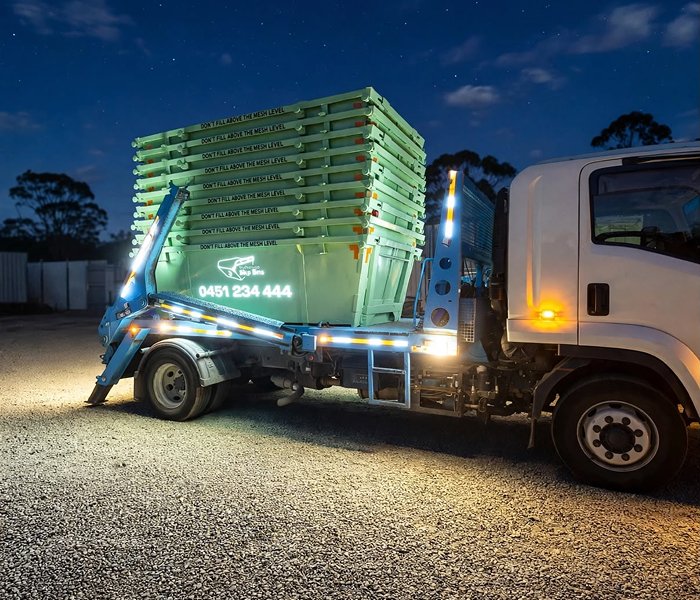
Our drivers collect your loaded skip bin directly from your driveway or job site.
2. Transfer to Resource Recovery Centers
Waste is transported directly to accredited materials recovery facilities across Sydney.
3. Sorting & Material Separation
Heavy machinery and manual sorting lines separate recyclable components—including metals, timber, cardboard, masonry, and plastics.
4. Processing & Repurposing
- Masonry & Concrete: Crushed into road base and aggregate.
- Green Waste: Composted into nutrient-rich soil products.
- Scrap Metal: Smelted and repurposed into construction materials.
5. Landfill Divergence
Only non-recyclable residual materials are safely disposed of, ensuring maximum landfill diversion.
Strictly Prohibited Hazardous Items
To ensure compliance with NSW EPA regulations and protect worker safety, the following hazardous items MUST NOT be placed in any standard skip bin:
Prohibited Materials
- Asbestos & Fibro Sheeting: Strictly forbidden by law due to health risks. Requires specialized containment and licensed disposal.
- Chemicals, Oils & Liquid Paints: Liquid waste contaminates entire sorting facilities and cannot be processed.
- Gas Bottles & Fire Extinguishers: Pressurized cylinders pose severe fire and explosion risks during transport.
- Car Batteries & Hazardous Solvents: Contain corrosive acids and heavy metals that leach into ground systems.
- Perishable Food Waste: Putrescible kitchen waste attracts pests and causes health hazard risks.
Compliance Warning
Warning: Placing hazardous materials into standard skip bins will result in the bin being rejected for transport, alongside potential decontamination and sorting surcharges mandated by transport laws.
Join Us in Keeping Sydney Sustainable
Need assistance sorting your project waste or choosing the right bin type? Contact our friendly Wetherill Park team today for clear advice and transparent flat-rate quotes.
Frequently Asked Questions
We divert up to 95% of collected waste from Sydney landfills by partnering with advanced resource recovery and sorting facilities.
Yes! Electronics such as old TVs, computers, monitors, printers, and small appliances can be loaded into General Household or Commercial skip bins for proper e-waste recycling.
Liquid paints, oils, and household chemicals cannot go in skip bins. You must dry out small amounts of paint using paint hardener or drop them off at designated council chemical cleanout days across Sydney.
Ready to Dispose of Your Waste Responsibly?
Get fast, reliable, eco-friendly skip bin hire delivered to your home or job site in Wetherill Park, Auburn, or Greater Sydney. Book online today or call our team for immediate delivery!